UN and partners expand connectivity for refugees initiative in Chad
Date: 2025-11-11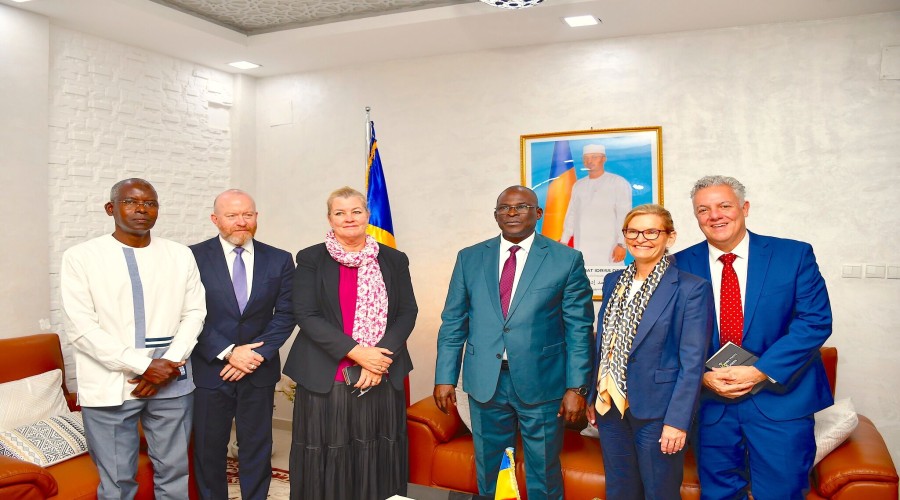
By: Nana Appiah Acquaye
UNHCR,
the UN Refugee Agency, and the International Telecommunication Union (ITU) are
intensifying efforts to connect forcibly displaced people and host communities
in Chad, aiming to reach 20 million people across refugee-hosting countries by
2030.
The
Connectivity for Refugees (CfR) initiative, launched in 2023 during the Global
Refugee Forum, brings together public and private partners to provide
affordable and accessible digital services in refugee settlements. During a
two-day joint visit to Chad, ITU Secretary-General Doreen Bogdan-Martin, GSMA
Mobile for Development Foundation President John Giusti, and UNHCR Deputy High
Commissioner Kelly T. Clements observed the transformative impact of digital
access on Sudanese refugees and local communities.

Connectivity
enables access to education, financial services, and healthcare, fostering
greater self-reliance and stability. In Chad, home to around 1.5 million
refugees, local mobile operators Airtel Chad and Moov have upgraded
infrastructure in eastern regions. Emergency.LU, a Luxembourg-funded
public-private partnership, is providing high-performance satellite
connectivity. Four connected centres are being established in Djabal, Farchana,
Idrimi, and Oure Cassoni settlements to serve as learning hubs for refugees and
host communities.
The
partners are working to strengthen regulatory frameworks and infrastructure to
scale the initiative. UNHCR and ITU are seeking at least $20 million in core
support and $200 million in direct investment to expand connectivity solutions.
Development actors, including the World Bank and IFC, are being engaged to
integrate refugee-hosting areas into larger digital infrastructure projects.

“Connectivity
can restore dignity and hope for displaced people and host communities,” said Bogdan-Martin. “It opens
doors to digital opportunity in places where Internet access is a lifeline, not
a luxury.”
Clements
added, “Our goal is ambitious, but we are delivering results that will help
create resilient, inclusive communities. Refugees are not passive – they are
eager to connect, learn, and build their future.”
The
CfR initiative is part of a broader effort to bridge the digital divide, with
ITU and GSMA coordinating solutions that integrate refugees into national and
regional digital ecosystems, ensuring no one is left behind in the push for
global connectivity.