DCO launches Digital Economy Navigator 2025, calls for urgent action to close global digital gaps
Date: 2025-11-04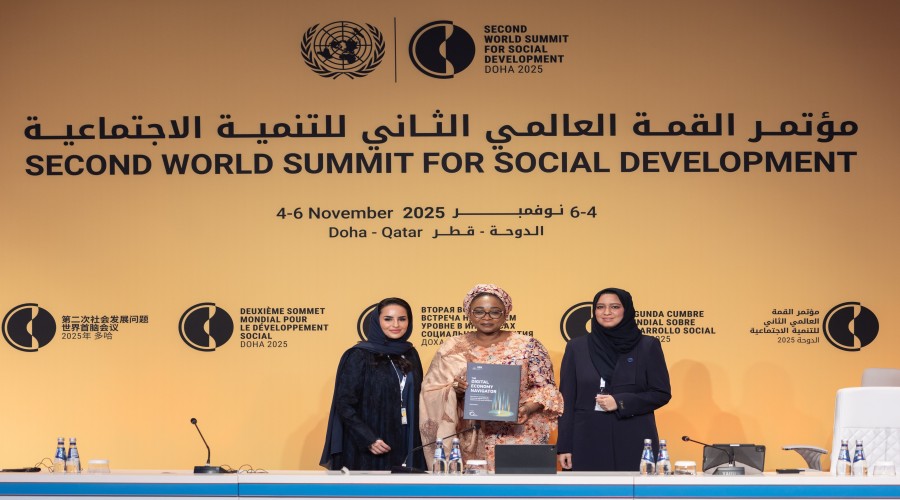
By: Nana Appiah Acquaye
The
Digital Cooperation Organization (DCO) has unveiled the Digital Economy
Navigator 2025 (DEN 2025) at the Second World Summit for Social Development,
highlighting significant progress in digital development but warning of
persistent gaps in access, gender inclusion, and AI readiness between high and
low-income countries.
The
DEN 2025 covers 80 countries representing 94 percent of global GDP and 85
percent of the world’s population, using 145 indicators and data from more than
41,000 people. Findings show that internet access now reaches more than 80
percent of people across the countries measured, with lower-middle-income
economies recording the biggest improvement gains driven by targeted policy and
investment. The DCO estimates that connecting underserved communities could
allow an additional 1.3 billion people to access digital banking and online
services.
DCO
Secretary-General Deemah AlYahya said DEN 2025 shows nations must shift from
measuring progress to accelerating transformation. She urged governments to
adopt more agile digital policy frameworks and called on industry to play a
strategic role in responsible investment. She stressed that digital exclusion
remains a threat, while collective action can enable every nation to
participate and lead in the digital economy.

The
report also highlights rapid but uneven AI development, with advanced economies
moving fastest while regions such as Sub-Saharan Africa and South Asia show
high potential for catch-up if supported with infrastructure, investment, and
skills development. Cross-border trade is growing, with 66 of the 80 countries
deploying online service portals. However, restrictions on ICT goods remain a
barrier to affordable device access.
Gender
inclusion continues to rise, but gaps remain in digital skills and pathways to
future careers. Global gender equality in digital participation averages 70.8
percent, yet only 3.1 percent of female graduates pursue ICT-related fields,
according to the report.
DEN
2025 also introduces a new “Digital for Sustainability” pillar, reflecting the
opportunity for emerging economies to leapfrog legacy systems and adopt cleaner
technologies. The methodology and framework behind the navigator were validated
by international experts to ensure relevance and reliability.
The
DCO is encouraging governments, industry stakeholders, international
organizations, and researchers to use DEN 2025 as a shared reference point to
strengthen cooperation, build digital capacity, and expand trust in online
systems to ensure digital transformation benefits are more widely distributed.