Global leaders launch Samarkand Declaration to strengthen technology diplomacy worldwide
Date: 2025-11-03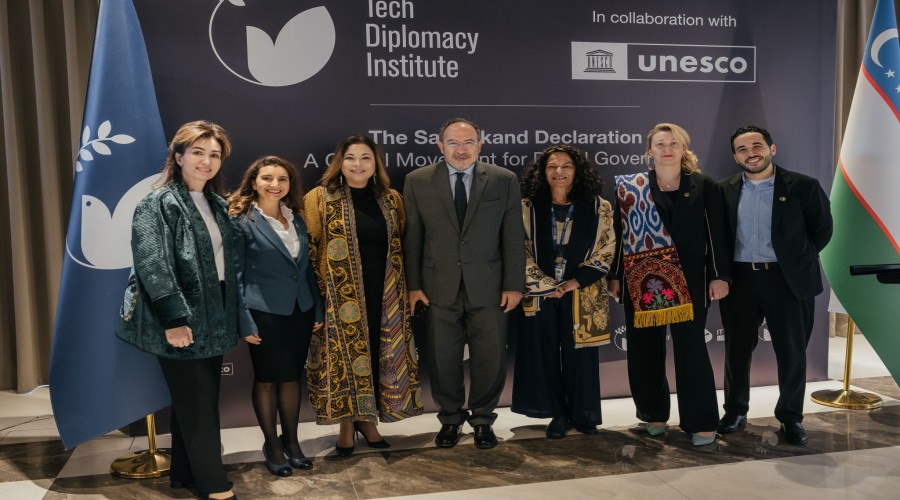
By: Nana Appiah Acquaye
World
leaders have officially adopted the Samarkand Declaration on Technology
Diplomacy, marking the launch of a new global initiative aimed at ensuring
every nation has a voice in shaping the digital future. The declaration was
unveiled on November 1, 2025, in Samarkand, Uzbekistan, during UNESCO’s 43rd
General Conference, the first held outside Paris in four decades.

The
Samarkand Declaration introduces a voluntary global framework to support
countries in developing diplomatic capacity for technology governance,
especially in emerging areas such as AI, data protection, and cybersecurity. It
establishes four core pillars for participating states: appointment of
dedicated Tech Ambassadors or equivalent representatives, coordinated
contributions to digital standards, participation in an annual Global Tech
Diplomacy Forum, and universal accessibility for all UNESCO member nations
regardless of economic or political status.

The
initiative responds to widening disparities in tech representation, where more
than 170 countries currently lack formal tech diplomacy structures, while
fragmented regulations and conflicting data protection laws continue to create
global governance gaps.
Leaders
at the launch stressed the need for inclusive cooperation in the digital era.
The Tech Diplomacy Institute will begin a series of continental signing events
from 2026 to 2028, with a goal of universal adoption by 2030. Among the early
signatories is IT Park Uzbekistan, a major driver of startup development and IT
sector growth in the country.