MWC25 Kigali opens with strong calls for policy reforms to fast-track Africa’s digital transformation
Date: 2025-10-21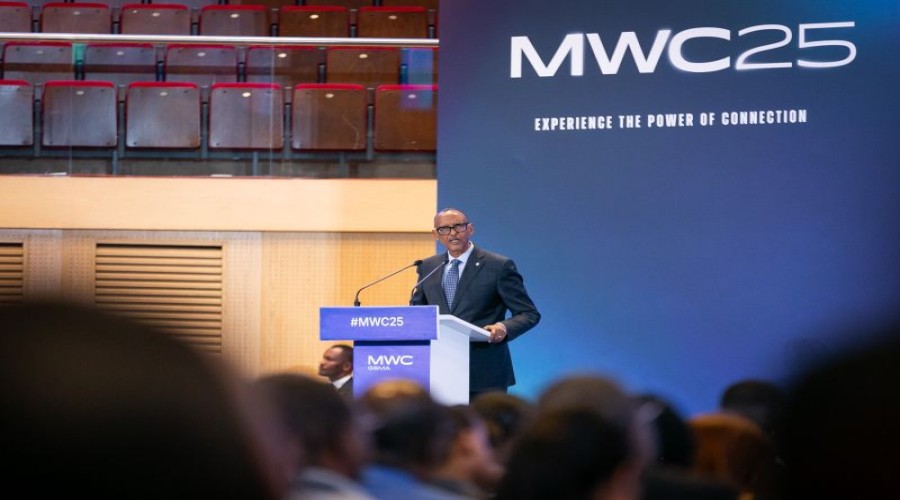
The GSMA MWC25 Kigali opened today with a strong call for urgent policy reforms to accelerate Africa’s digital transformation and make the continent’s digital future inclusive and sustainable. Industry leaders, innovators, and policymakers from across Africa and beyond gathered to explore how mobile technology can unlock economic growth and bridge the continent’s connectivity divide.
In his opening remarks, GSMA Director General Vivek Badrinath highlighted three critical priorities for policymakers—handset affordability, inclusive AI language models, and energy resilience. He urged collaboration between governments, industry, and development partners to remove barriers hindering digital inclusion. “Africa’s mobile sector is one of the most dynamic in the world, but we must tackle persistent barriers such as high device costs, energy availability issues and the lack of inclusive AI,” said Badrinath.
For
the third consecutive year, His Excellency Paul Kagame, President of Rwanda,
officially opened the conference, which runs for three days and features
high-level keynotes, roundtables, and summits. The opening session, themed “Africa’s
Future First – Determining the Path to a Digital Future,” focused on how
infrastructure, AI, and regulatory frameworks must evolve together to achieve
universal connectivity.
This
year’s event also marks the debut of the GSMA Ministerial Programme, a
dedicated platform for policymakers to shape strategies that will drive
Africa’s digital transformation agenda.

The
GSMA also launched its Mobile Economy Africa 2025 Report, revealing
that the mobile industry contributed $220 billion to Africa’s economy in
2024—7.7% of the continent’s GDP—with projections rising to $270 billion by
2030. The report further noted that 416 million Africans now use mobile
internet, a figure expected to reach 576 million by 2030. It also highlighted
the continent’s persistent “usage gap,” with nearly 960 million people still
not using mobile internet despite being covered by networks.
As
part of efforts to close that gap, the GSMA and six major mobile
operators—Airtel, Axian Telecom, Ethio Telecom, MTN, Orange, and
Vodacom—launched the Handset Affordability Coalition, proposing a new
baseline for affordable entry-level 4G smartphones. The initiative aims to
reduce smartphone costs and expand digital access, following the success of
similar policy measures in South Africa.
Another
key announcement came in the field of artificial intelligence. Under the theme “AI
in Africa, by Africa, for Africa,” the GSMA unveiled a continent-wide
collaboration with leading telecom operators, research bodies, and AI startups
to develop inclusive African AI language models. The initiative seeks to ensure
African languages, cultures, and knowledge systems are represented in the
global AI ecosystem.
Energy
access also emerged as a major focus at the conference. The GSMA report
revealed that over 80% of the world’s unelectrified population resides in
Africa, making energy access a crucial enabler of digital inclusion. The
Ministerial Programme will address how governments can integrate energy and
digital infrastructure planning to power connectivity and digital services
sustainably.
Angela
Wamola, Head of Africa at the GSMA, emphasized the continent’s readiness to
lead its digital destiny. “Here in Kigali, the message is clear: Africa has
the talent and ambition, but reforms on affordability, AI and energy are
essential to drive inclusive growth and ensure everyone benefits from the
digital economy,” she said.
MWC25
Kigali continues through October 23, bringing together leaders from government,
industry, and development sectors to chart the next phase of Africa’s digital
evolution.
By:
Nana Appiah Acquaye