The government of Côte
d’Ivoire has taken a major step in advancing its digital transformation agenda
with the identification of 232 digital public services as part of its national
digital roadmap.
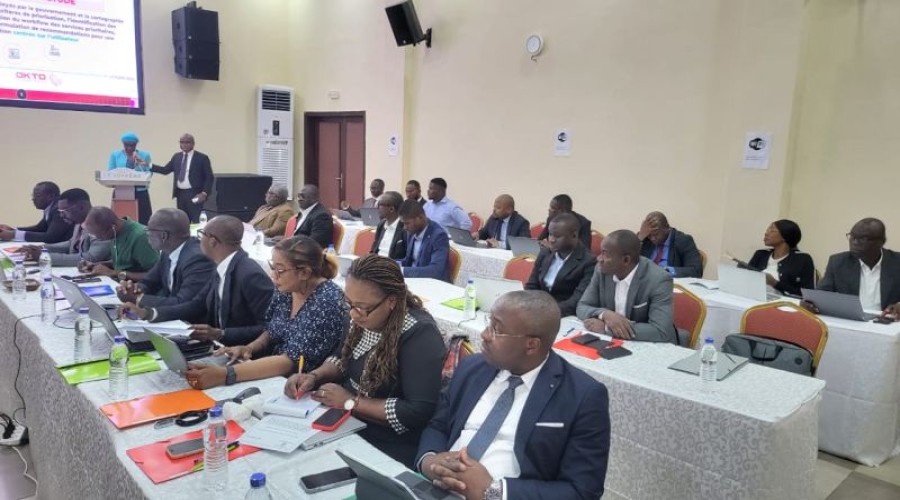
The announcement was made at
a three-day workshop that opened on Wednesday, October 1, 2025, in Grand-Bassam
under the framework of the Digital Acceleration Project (PADCI) and the
supervision of the Ministry of Digital Transition and Digitalization. The
workshop brought together representatives of government ministries, public and
private institutions, and digital sector experts.
The study, carried out by
the OKTO Technologies and IT6 consortium, classified the 232 services into four
categories: informational, semi-transactional, transactional, and integrated.
It highlighted five priority sectors where digitalization is considered
strategic—Civil Status, Justice, Education, Health, and Public Administration.
The agriculture sector was also emphasized as a key area to boost productivity
and support rural livelihoods.
Speaking at the workshop, the
Deputy Chief of Staff at the Ministry, Rockya Fofana said the mapping exercise
provides stakeholders with a reliable overview of the administration’s digital
platforms and serves as a basis for identifying services that require
improvement or new development.
Managing Director of OKTO
Technologies, Brice Landry Dally, underscored the importance of a clear roadmap
and governance model. “We have established a clear roadmap and a governance
model so that each ministry can take ownership of the recommendations of the
study and translate them into concrete actions within the framework of the
2026-2030 National Development Plan,” he said.
The workshop is expected to
validate a prioritized list of services to be improved and developed, alongside
an implementation action plan and strategic recommendations to enhance the
quality and efficiency of e-services.
The Digital Acceleration
Project, co-financed by the World Bank, reflects the Ivorian government’s
commitment to modernizing public administration and bringing essential digital
services closer to citizens and businesses.
By: Nana
Appiah Acquaye