Nigeria's
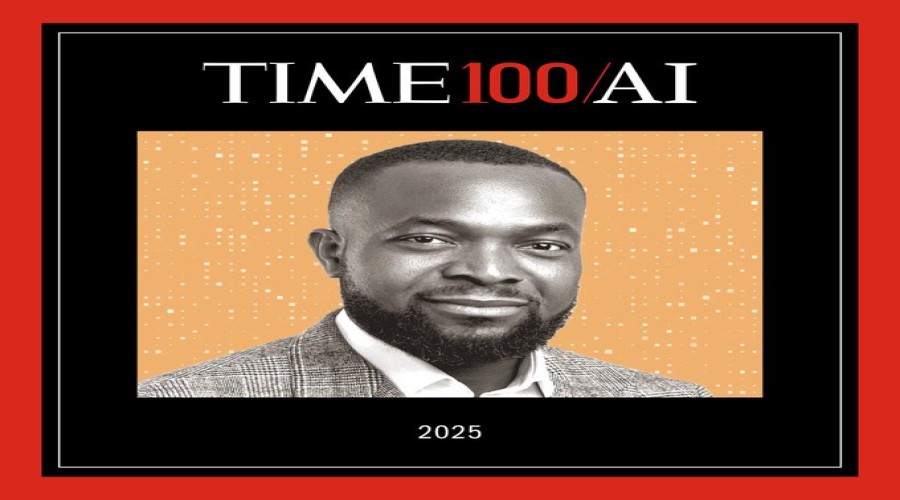
Minister of Communications, Innovation, and Digital Economy, Dr. Bosun Tijani,
has been named to TIME Magazine's prestigious TIME100 AI list for 2025,
signaling the country's emerging leadership in artificial intelligence
development. This recognition highlights Nigeria's strategic approach to
harnessing AI for national development and global competitiveness.
The inclusion
on the influential list comes after two years of transformative work in
Nigeria's AI ecosystem, anchored by the National AI Strategy developed through
the collaboration of over 120 experts of Nigerian descent. This comprehensive
framework establishes Nigeria's vision for the responsible development and
deployment of artificial intelligence across critical sectors including
healthcare, agriculture, education, and financial services.
Under Dr.
Tijani's leadership, Nigeria has moved beyond theoretical planning to practical
implementation, demonstrating real-world AI applications that address local
challenges while contributing to global AI innovation. The ministry has
facilitated the scaling of mature AI solutions developed by Nigerian innovators
through partnerships with major technology organizations including Google and
the Gates Foundation.
The recognition
also reflects Nigeria's commitment to long-term AI sustainability through the
establishment of two key institutions: the AI Collective, a community of
researchers and practitioners supported by Luminate Group, and the AI Trust,
comprising national leaders who will ensure ongoing investment and
prioritization of AI development.
The minister's
vision aligns with President Bola Ahmed Tinubu's economic agenda, which targets
building a $1 trillion economy through technological innovation and increased
productivity.
The TIME100 AI
recognition validates Nigeria's unique approach to AI development, which
emphasizes both technological advancement and social impact. Rather than simply
importing solutions, Nigeria has focused on building homegrown capacity and
developing AI applications that address specific national priorities while
contributing to global knowledge.
By: Nana Appiah Acquaye