RASCOM DG hails Temidayo Oniosun’s historic space initiative as a cultural and scientific milestone for Africa
Date: 2025-07-31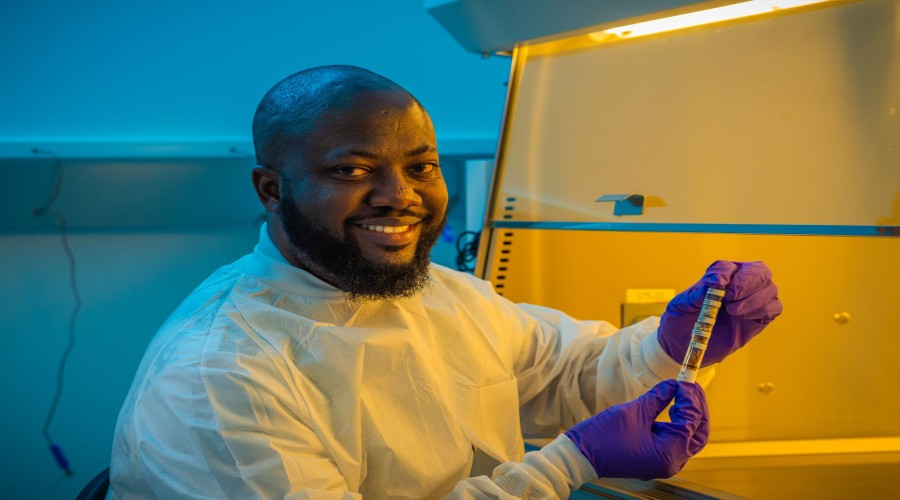
The Director General of the Regional African Satellite Communication Organisation (RASCOM), Timothy Ashong, has lauded Dr. Temidayo Oniosun’s recent contribution to space science as a remarkable achievement that blends culture, identity, and innovation in a way that powerfully represents Africa on the global stage.
Dr.
Oniosun, Managing Director of Space in Africa, made history this week by
sending a Nigerian Egusi seed to the International Space Station (ISS) as part
of the Karman Project’s Seeds in Space initiative. This marks the first time a
Nigerian seed is being taken to space and represents a significant intersection
of traditional heritage and modern scientific exploration.
In
a statement issued from RASCOM, Mr. Ashong described the initiative as “a
symbolic and transformative act that speaks to the heart of what Africa’s space
agenda must embody a fusion of knowledge, culture, and global relevance.”
“The
decision to send Egusi, a seed deeply rooted in the culinary and cultural
fabric of Nigeria and West Africa, is not only a personal triumph for Temidayo
but a continental moment of pride,” Mr. Ashong stated. “It shows that space is not just about
satellites and rockets, but about the preservation and projection of African
identity through science.”

The
Seeds in Space mission is exploring how seeds respond to microgravity, with
implications for future space farming and food security in extraterrestrial
environments. But for Africa, Mr. Ashong notes, it is equally about visibility,
representation, and inspiring the next generation of scientists, engineers, and
cultural ambassadors.
“As
Africa advances its role in global space development, we must continue to tell
our stories in space — stories that reflect who we are and what we value,” he said. “Temidayo’s choice of
Egusi is a subtle but powerful statement that African contributions to space
are unique, meaningful, and essential.”
Mr.
Ashong reaffirmed RASCOM’s commitment to supporting individuals and
institutions that push the boundaries of African participation in global space
missions. “We will continue to stand by African pioneers like Temidayo whose
work puts our continent on the map, not just scientifically, but symbolically.
This is how we build a truly African space legacy.”
He
concluded by urging young Africans to see themselves in such accomplishments
and to believe that they too can reach for the stars — and take a piece of home
with them when they do.
By:
Nana Appiah Acquaye