Senegal makes history as first francophone African nation to join NASA's Artemis Accord
Date: 2025-07-25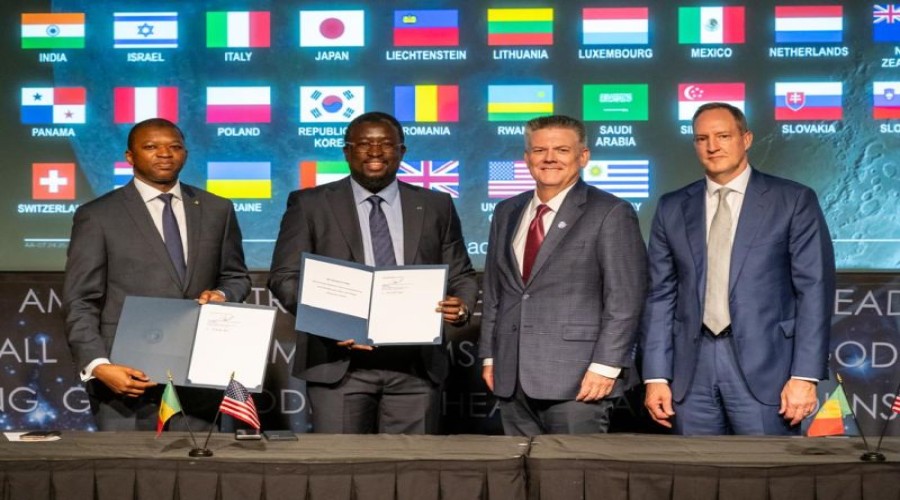
Senegal cemented its position as a rising space power on Thursday, July 24, 2025, by becoming the 56th signatory to NASA's Artemis Accords during a ceremony at the U.S. space agency's headquarters. The historic signing makes Senegal the first French-speaking African country to join the international framework governing peaceful space exploration.
Represented by Maram Kaire, Director-General of Senegal's
Space Studies Agency (ASES), the West African nation affirmed its commitment to
responsible, multilateral cooperation in outer space. The signing ceremony
brought together officials from NASA, the U.S. State Department, and both
countries' diplomatic missions, underscoring the growing strategic partnership
between Senegal and the United States.

This milestone follows recent high-level engagements between Senegalese President Bassirou Diomaye Faye and U.S. President Donald Trump, reflecting strengthened bilateral ties. Senegal's accession to the Artemis Accords formalizes years of technological collaboration and positions the country to participate in upcoming lunar exploration initiatives and beyond.
"The Artemis Accords represent more than space
exploration – they embody our shared values of transparency, peaceful
cooperation, and sustainable development," said Kaire during the signing. The
agreement aligns with Senegal's national vision to leverage science and
technology as drivers of economic transformation.

As signatories, Senegal commits to principles including the peaceful use of space, interoperability of systems, and sustainable resource utilization. The country's participation opens new opportunities for its growing space sector, including potential involvement in NASA's Artemis program to return humans to the Moon and establish a sustainable lunar presence.
This strategic move reinforces Senegal's leadership in
Africa's space revolution, building on previous achievements like its Earth
observation satellite program. By joining the Accords, Senegal gains access to
an international network of spacefaring nations while contributing African
perspectives to global space governance.
By: Nana Appiah Acquaye