ECOWAS empowers women entrepreneurs through digital trade initiative
Date: 2025-07-25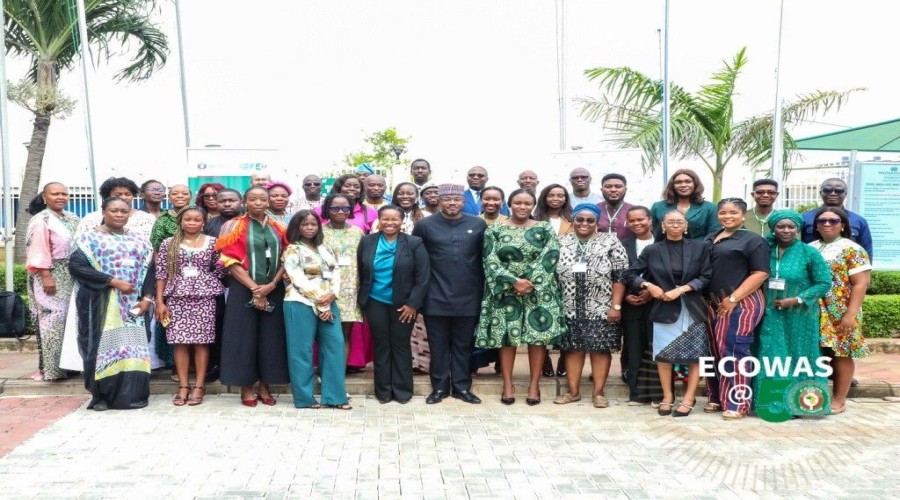
Lagos played host to a landmark gathering of West Africa's digital trade stakeholders as ECOWAS, in partnership with UNCTAD and supported by the World Bank-funded WARDIP program, convened the eTrade for Women Joint Workshop. The event marked a strategic push to amplify women's participation in the region's burgeoning digital economy.

Speaking on
behalf of ECOWAS Commissioner Massandjé Touré-Litsé, Trade Director Kolawole
Sofola noted the organization's commitment to gender-inclusive digital
transformation. "Our ECOWAS E-Commerce Strategy deliberately positions
women, youth, and small-scale producers as drivers of regional trade
integration," Sofola stated, referencing the policy framework adopted
by regional ministers in 2023. The workshop forms part of ongoing efforts to
translate this strategy into concrete opportunities for women entrepreneurs
across member states.
UNCTAD
representative Sonia Nnagozie underscored digital trade's transformative
potential for women-led businesses. "When we remove barriers to women's
digital participation, we unlock exponential growth for entire economies,"
she noted, praising ECOWAS for its leadership in creating enabling ecosystems.
The discussions yielded practical recommendations to address structural
challenges women face in accessing digital marketplaces.

Participants
explored ECOWAS's innovative platforms including the 50 Million African Women
Speak initiative and the West Africa Competitiveness Observatory's B2B
matchmaking portal, both designed to connect women entrepreneurs with regional
and continental markets. The workshop also highlighted successful models from
the ECOWAS Trade and Gender Action Plan and export readiness programs that have
equipped women with digital trade competencies.
This gathering
of women entrepreneurs, trade ministry officials, and development partners
signals growing momentum behind West Africa's digital integration agenda. By
prioritizing women's inclusion in e-commerce ecosystems, ECOWAS aims to harness
digital technologies as equalizers that can bridge gender gaps in regional
trade while accelerating progress toward the African Continental Free Trade
Area's objectives.
By: Nana Appiah Acquaye