
UN Climate Ruling: International Court of Justice (ICJ) issues landmark advisory opinion on state obligations
Date: 2025-07-24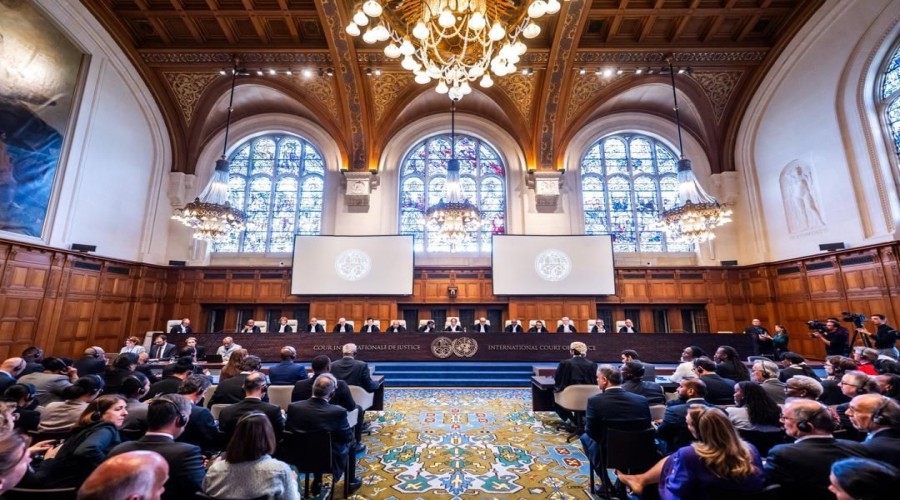
In a groundbreaking unanimous decision, the International Court of Justice (ICJ) has delivered its first-ever advisory opinion on climate change, clarifying the legal obligations of states to protect the climate system under international law. The landmark ruling, issued on 23 July 2025, responds to a 2023 request from the UN General Assembly and represents the most significant judicial intervention in global climate policy to date.
The Court's
opinion establishes that states have binding obligations under multiple
international treaties - including the UN Climate Convention, Paris Agreement,
and Law of the Sea to mitigate greenhouse gas emissions and prevent significant
harm to the climate system. It confirms these duties extend to regulating
private sector emissions and require cooperation between nations based on "common
but differentiated responsibilities."
Crucially, the
ICJ determined that breaches of these obligations constitute internationally
wrongful acts under customary international law. While stopping short of
assigning blame to specific countries, the Court outlined that states causing
climate harm through action or inaction, such as maintaining fossil fuel
subsidies or failing to regulate emissions, could face legal consequences
including requirements to cease harmful practices, provide reparations, or
compensate vulnerable nations.

The ruling carries particular significance for small island states and climate-vulnerable nations, confirming they are entitled to seek remedies when harmed by others' failures to meet climate obligations. The Court noted scientific evidence clearly links anthropogenic emissions to climate impacts, establishing a framework for future climate litigation despite complex causation questions.
With 96 nations
and 11 international organizations participating, the highest engagement in the
ICJ's history the opinion reflects growing global consensus on the urgency of
climate action. The decision reinforces the Paris Agreement's 1.5°C goal as a
legal benchmark and confirms climate protection obligations have attained the
status of erga omnes duties owed to the international community.
Legal experts
anticipate this advisory opinion will reshape climate governance, providing a
foundation for future disputes and strengthening accountability mechanisms
under international law. While non-binding, the ICJ's authoritative
interpretation is expected to influence national policies, international
negotiations, and upcoming climate cases before other judicial bodies.
The unanimous
ruling sends a powerful signal that climate inaction may increasingly face
legal consequences, with the Court emphasizing states' continuing duties to
fulfill their climate commitments regardless of past failures.
By: Nana Appiah Acquaye