The African
Union Development Agency-NEPAD (AUDA-NEPAD) has launched a groundbreaking draft
framework, African EdTech 2030: Vision, Plan and Policy, setting out a bold
strategy to transform education across the continent through technology.
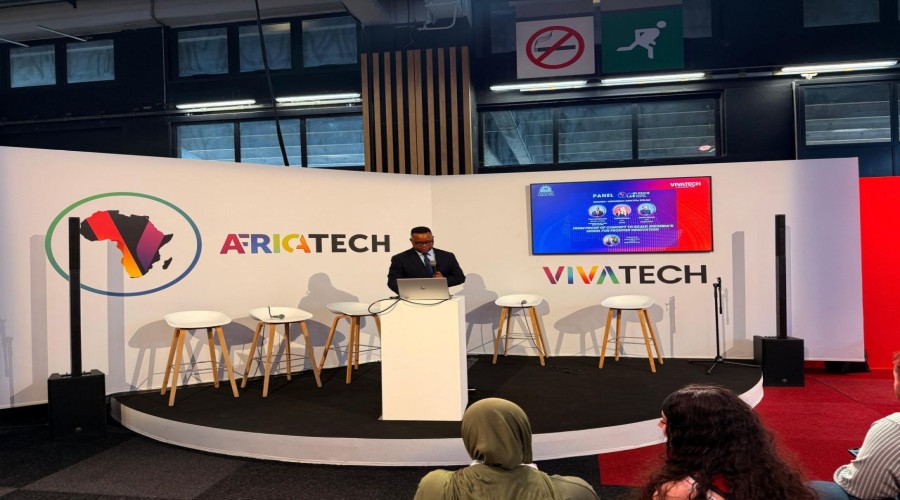
Unveiled during the STEMtastic Adventures! Africa symposium, the plan envisions
Africa as a global leader in mobile-first, locally relevant digital learning,
aligning with key continental blueprints including Agenda 2063, STISA-2034, and
the AU Digital Transformation Strategy.
The framework
outlines an ambitious yet achievable goal: ensuring every African
learner—regardless of gender, location, or socioeconomic background—has
affordable access to high-quality, localized digital learning resources. By
leveraging Africa’s rapid mobile adoption and innovative offline solutions, the
plan aims to overcome traditional infrastructure limitations, much like mobile
money revolutionized financial inclusion.
Dr. Barbara
Glover, Program Officer at AUDA-NEPAD, emphasized the plan’s potential to
accelerate education transformation, stating, "This framework harnesses
local innovation and leadership in EdTech to make Africa’s education systems
more inclusive, resilient, and future-ready."
Africa’s
youthful population—projected to reach 2.5 billion by 2050—faces critical gaps
in education access and quality. Over 30 million primary-age children in
Sub-Saharan Africa remain out of school, while the continent needs 17 million
more teachers by 2030 to meet demand. The COVID-19 pandemic further exposed
systemic weaknesses, as many countries struggled to transition to remote
learning due to limited digital infrastructure.
The EdTech 2030
plan directly addresses these challenges by prioritizing:
- Access
& Infrastructure: Expanding low-cost, offline-capable digital learning
tools, particularly in underserved regions.
- Localized
Content: Supporting homegrown, multilingual
educational platforms like Senegal’s XamXam, which serves 1.2 million users in
Wolof.
- Teacher
Training: Equipping educators with digital
skills to enhance classroom and remote learning.
- Policy
Harmonization: Establishing continent-wide
standards for interoperability, data privacy, and equitable funding.
The framework’s
implementation will unfold in three strategic phases:
1. Foundation
Building (2024-2026): Developing policy frameworks and technical standards to
enable cross-border content sharing.
2. System
Integration (2026-2028): Scaling interoperable Digital Public Infrastructure
(DPI), allowing seamless access to educational tools.
3. Consolidation
& Export (2029-2030): Positioning Africa as a global EdTech innovator, with
a Pan-African EdTech Research Hub driving further advancements.
The plan calls
for coordinated action across governments, regional bodies, private sector
players, NGOs, and communities. Governments will lead policy alignment and
funding, while the private sector will develop context-appropriate
technologies. Development partners like UNICEF and UNESCO will provide
technical expertise, ensuring the framework aligns with global best
practices. Sustainability will rely on
blended financing models, combining grants, private investment, and subsidies,
alongside partnerships to scale proven solutions.
AUDA-NEPAD
invites stakeholders to review and contribute to the draft framework, ensuring
it reflects diverse needs and fosters collective action. John Kimotho, a key
architect of the plan, highlighted its transformative potential: "By
learning from pioneers like Kenya and Rwanda, Africa can leapfrog traditional
barriers and lead a new era in global EdTech."
By: Kanto Kai Okanta