Africa has come of age in space, but awareness must now catch up
Date: 2025-07-21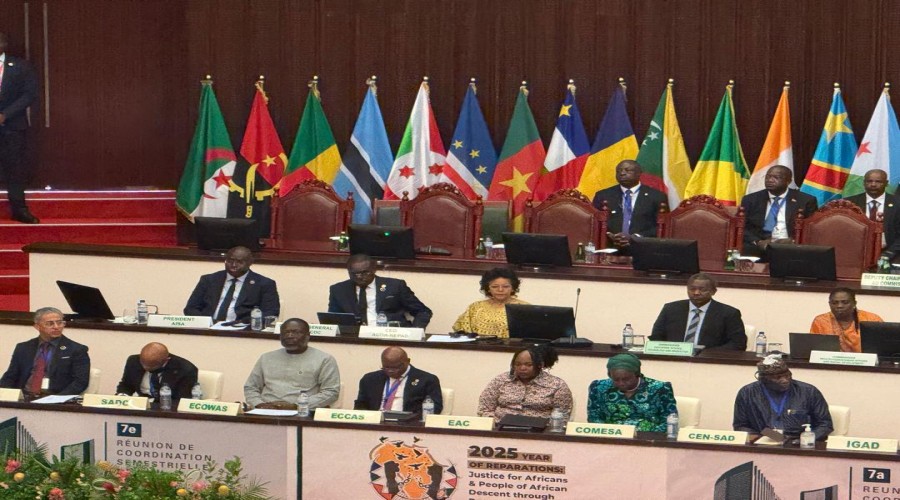
At the African Union’s 7th Mid-Year Coordination Meeting in Malabo, Dr. Tidiane Ouattara, President of the Council of the African Space Agency, delivered a powerful and unapologetic message: Space is no longer a luxury for Africa, nor is it about flashy rocket launches—it is the silent infrastructure powering our food security, disaster response, climate resilience, and even electoral transparency.
This bold declaration resonates deeply with
Africa’s growing maturity in global affairs. Dr. Ouattara made it clear that
Africa is no longer begging for inclusion in global conversations but is firmly
positioning itself as an indispensable actor. His assertion that space is how
Africa monitors its forests, predicts droughts, guides trade under AfCFTA, and
builds sovereignty over data and decisions, is a rallying call for the
continent to rise.
He rightly emphasized that transforming from raw
export economies to value-added production hinges on access to spatial
intelligence—satellite data that informs land use, logistics, energy, and urban
development. “Space is the map, the compass, and the watchtower of this
journey,” he noted. That vision is compelling, and it reflects how far Africa
has come.
However, as true and inspiring as these words are,
there remains a glaring disconnect between policy-level ambitions and
grassroots understanding. While institutions and policymakers embrace the
strategic importance of space and satellite technology, most of the African
populace remains unaware or uninformed about its benefits. Governments, media,
civil society, and even educational institutions have not done enough to bridge
this critical awareness gap.

This disconnect must be addressed—and urgently.
For Africa to fully claim its rightful place in the
global space ecosystem, the African Space Agency and its partners must
prioritise communication. Awareness creation is no longer optional—it is
essential. Space must be demystified for the ordinary African. The people must
see, understand, and appreciate how space technology is already affecting their
farms, roads, health, safety, and livelihoods.
A great first step would be to empower African
journalists with the tools and knowledge to communicate space-related
developments in accessible and impactful ways. The European Union has set a
strong example by organising space-focused training workshops for journalists
under programs like Copernicus and GMES & Africa.
Can the African Space Agency do the same?
It’s time to bring journalists, storytellers, and
communicators into the core of Africa’s space journey. Let them help shift the
narrative, spark curiosity, and nurture pride in homegrown satellite missions
and African-led innovations.
Dr. Ouattara’s message has set the tone. Now, we
must amplify it not just in boardrooms and summits but across airwaves,
classrooms, community centers, and social media. Because only when Africans see
themselves in space, will Africa’s space dreams truly lift off.
By: Nana Appiah Acquaye