Côte d'Ivoire expands digital access with new rural connectivity push
Date: 2025-07-21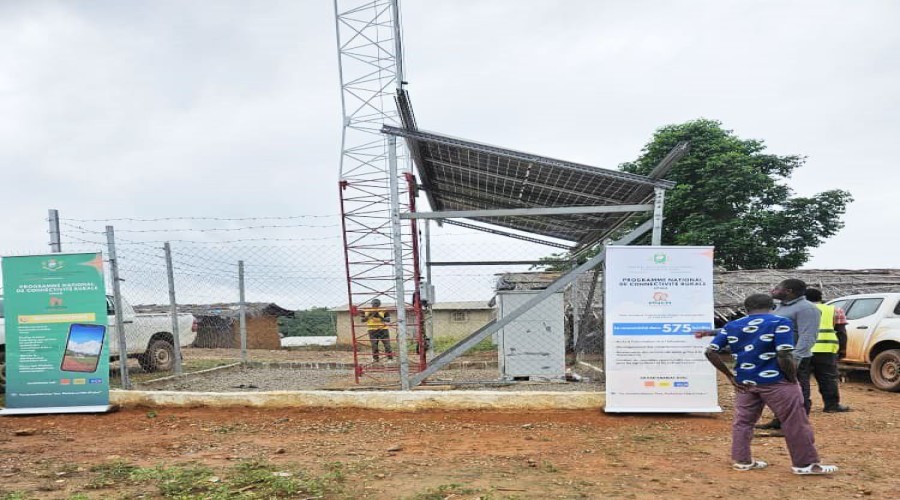
The Ivorian government has taken decisive steps to bridge the digital divide between urban and rural communities, launching a series of radio sites to bring mobile networks and broadband internet to underserved areas. Under the National Rural Connectivity Program (PNCR), seven localities across the regions of Lôh-Djiboua, Gôh, Worodougou, and Poro are now connected, marking a significant milestone in the country's digital inclusion strategy.

Since July 15, 2025,
teams led by PNCR Coordinator, Zakhary Ouattara have activated radio sites in
Kouassililié (Lôh-Djiboua), Tiégba and Kossehoua (Gôh), and Ahoutouagui (Nawa).
The rollout continues this week with Blapleu (Tonkpi) and Boron (Poro) on July
21, followed by Ouahiéré (Worodougou) on July 23. These installations are part
of a broader initiative to ensure that rural populations are no longer left
behind in the digital revolution.
Ibrahim Kalil Konaté,
Minister of Digital Transition and Digitalization, emphasized the program’s
alignment with President Alassane Ouattara’s vision of reducing inequality
between cities and villages. "This is about more than just
connectivity—it’s about ending the marginalization of rural communities and
ensuring their full participation in the digital economy," Konaté
stated. "Social and economic progress cannot happen if entire regions
remain offline."

The government has
set ambitious targets, with 50 additional sites expected to be operational by
the end of August 2025, extending coverage to border areas to enhance both
connectivity and national security. By December 2025, the PNCR aims to reach
575 rural localities, benefiting approximately 825,675 residents. A second
phase, beginning August 1, will expand infrastructure to 16 more villages in
Worodougou, Hambol, Bounkani, and Gbêkê.
This initiative is
not a short-term project but a sustained commitment. The PNCR will continue
into 2026, reinforcing Côte d'Ivoire’s determination to achieve nationwide
digital inclusion.
By: Nana Appiah Acquaye