Rwanda Space Agency inspires next generation through student immersion program
Date: 2025-07-14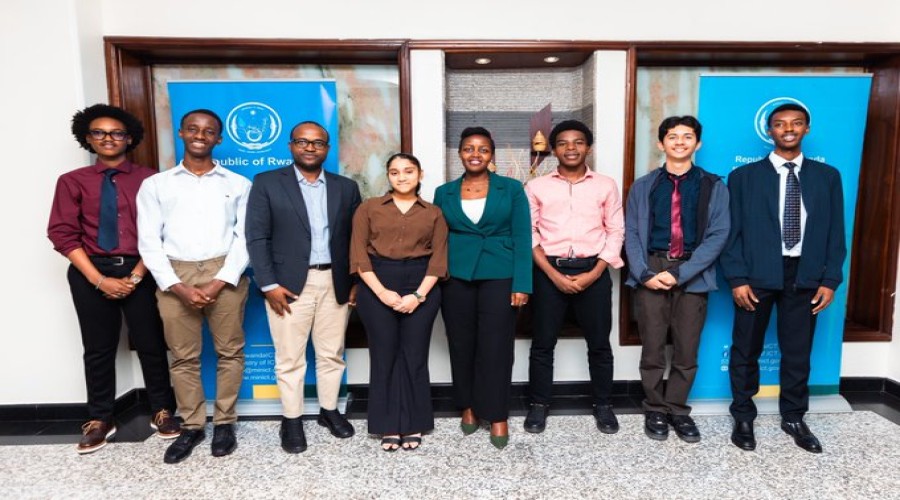
Rwanda Space Agency (RSA) has concluded an intensive job shadowing program for promising high school students from Gashora Girls Academy of Science and Technology (GHAST), offering hands-on exposure to Africa’s growing space sector. Over seven days, Grade 11 and 12 participants engaged directly with satellite engineers, Earth observation specialists, and geospatial analysts at RSA’s technical facilities.
The immersion program
covered critical space applications including remote sensing for agriculture,
telecommunications infrastructure, and Rwanda’s national space policy
framework. Students participated in practical sessions with RSA partners like
TRL Space and the Rwanda Information Society Authority (RISA), gaining insights
into career pathways across technical, policy, and entrepreneurial dimensions
of the industry.

“This experience
transforms abstract STEM concepts into tangible career possibilities,”
noted an RSA spokesperson. The initiative aligns with Rwanda’s National Space
Strategy objectives to cultivate homegrown talent and position the country as a
continental leader in space technology adoption. Participants worked with real
satellite data, explored miniaturized payload designs, and analyzed how
space-derived information supports national development priorities.
RSA’s education
outreach forms part of broader efforts to strengthen Rwanda’s innovation
pipeline, complementing academic partnerships with institutions like the
University of Rwanda’s African Space Innovation Centre. With Africa’s space
economy projected to exceed $20 billion by 2030, such programs ensure Rwandan
youth are equipped to lead the sector’s next phase of growth.

The agency plans to
expand the initiative, incorporating virtual reality simulations and satellite
ground station operations in future editions. GHAST students will present their
learning outcomes to Rwanda’s Ministry of Education and Ministry of ICT, informing
curriculum enhancements to prepare graduates for emerging tech-driven
opportunities.
By: Nana Appiah Acquaye